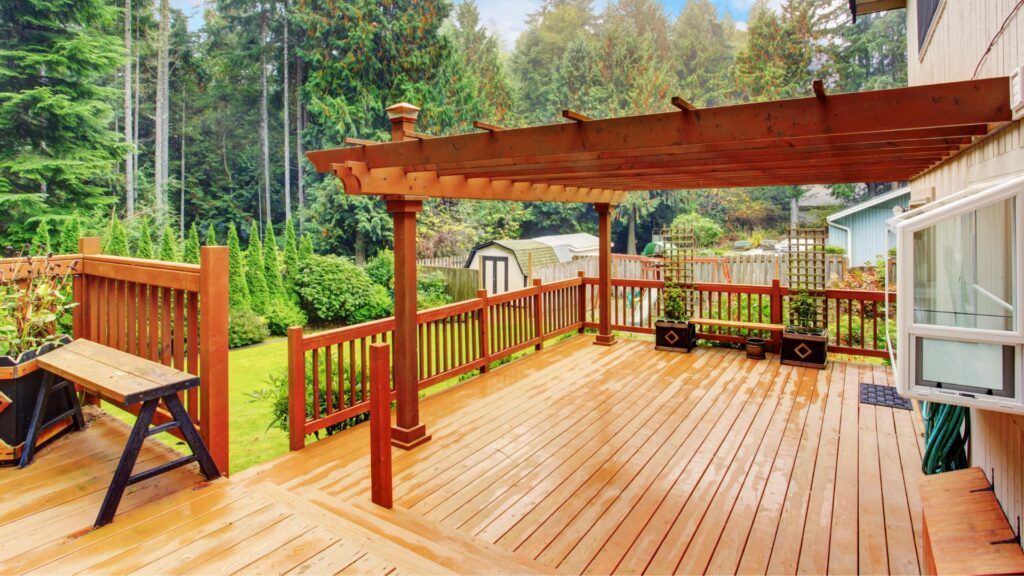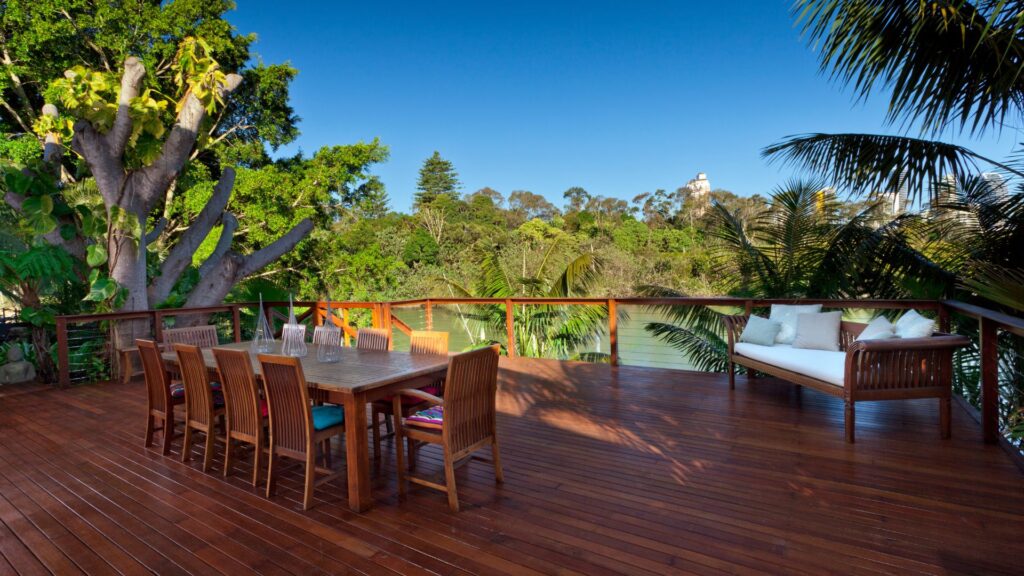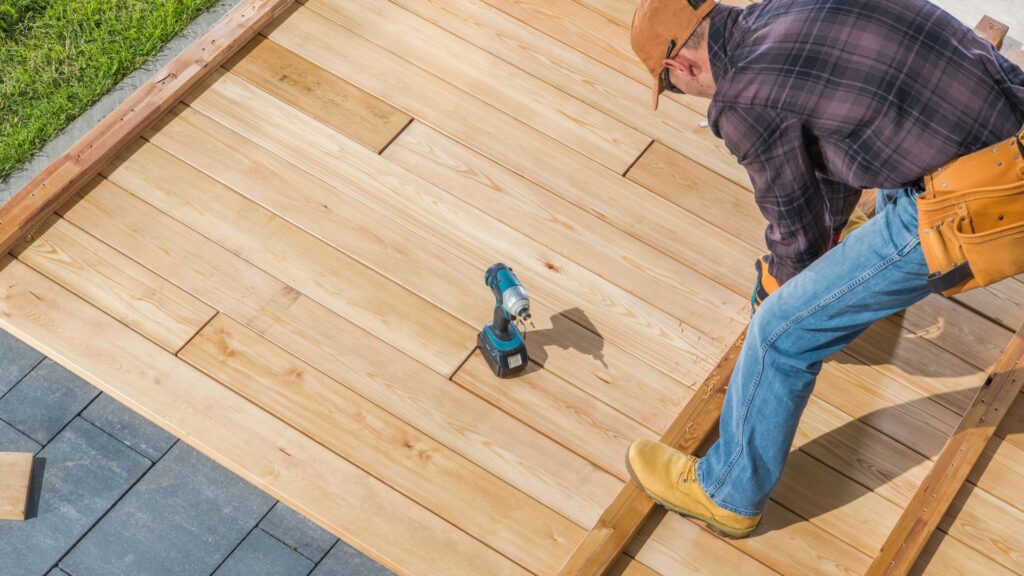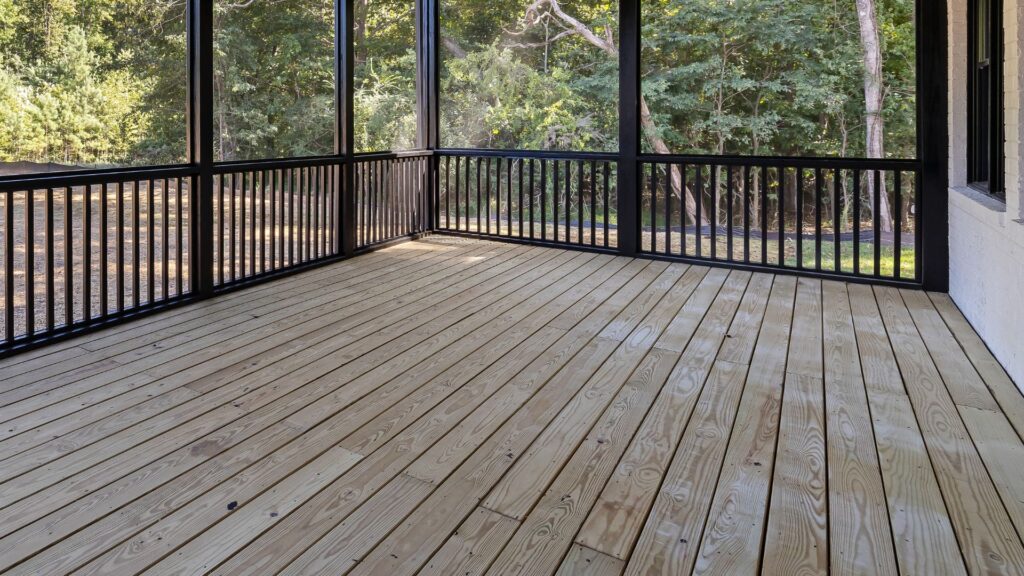
Welcome to our guide on the best deck materials for Christchurch weather, where you will learn how to choose a decking solution that can handle the unique climate conditions found across the region. From strong UV exposure and seasonal temperature changes to rain, moisture, frost, and coastal influences, Christchurch weather can have a significant impact on the appearance, durability, and maintenance requirements of your outdoor deck. Selecting the right material is essential for creating a space that remains attractive, safe, and functional for years to come. In this guide, we compare popular decking options, including hardwood, softwood, composite, aluminium, and other alternatives, helping you understand their strengths, weaknesses, and long-term value so you can make a confident and informed decision for your home.
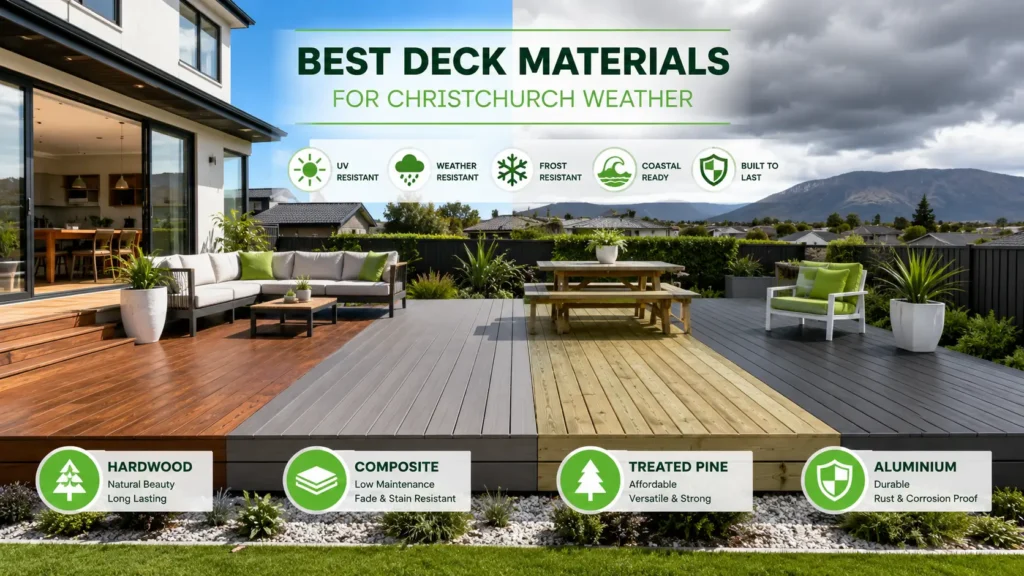
The best deck materials for Christchurch weather are composite decking, hardwoods such as Kwila and Vitex, and quality treated pine. These materials offer strong resistance to UV exposure, moisture, temperature changes, and coastal conditions. The right choice depends on your budget, maintenance preferences, desired appearance, and long-term durability goals.
Table of Contents
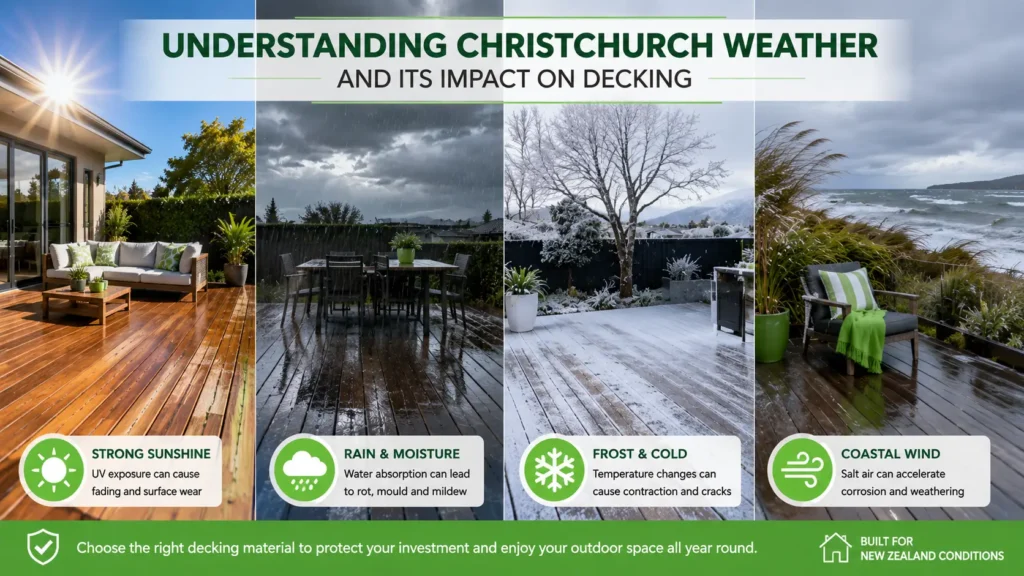
Understanding Christchurch Weather And Its Impact On Decking
Choosing the best deck materials for Christchurch weather starts with understanding the local climate and how it affects outdoor structures throughout the year. Christchurch experiences strong sunshine, regular rainfall, occasional frost, and, in some areas, exposure to coastal salt air. These environmental factors can influence how decking materials age, perform, and maintain their appearance over time. A deck that looks great when first installed may deteriorate much faster if the material is not suited to the conditions it faces. Understanding these challenges can help homeowners make informed decisions that improve durability, reduce maintenance, and protect their investment for years to come.
High UV Exposure And Sun Damage
Christchurch receives significant levels of ultraviolet radiation, particularly during the summer months. Prolonged exposure to strong sunlight can affect both timber and composite decking materials, although the impact varies depending on the product selected.
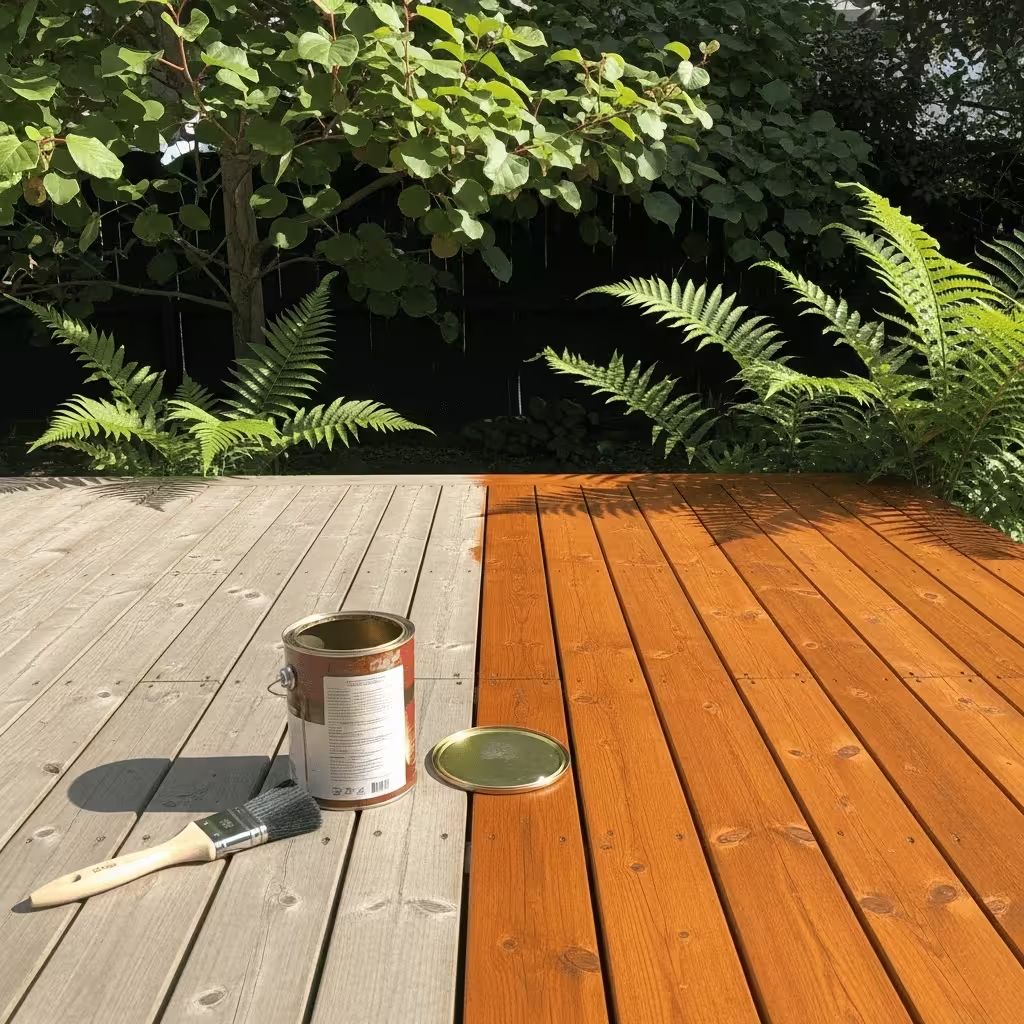
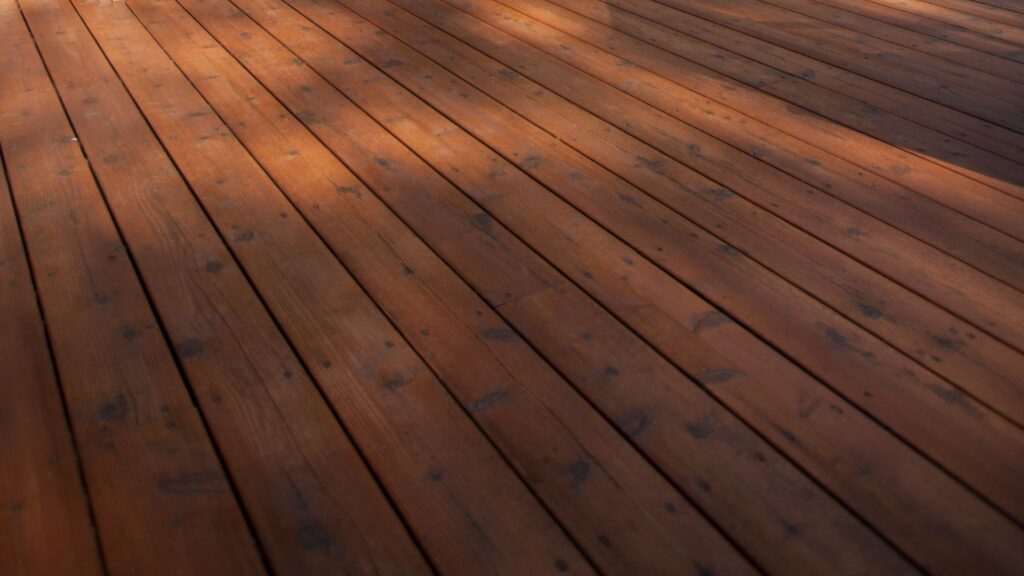
Natural timber decking is particularly vulnerable to UV-related damage. Without proper protection, the sun can gradually break down the wood’s surface fibres, causing colour fading and weathering. Rich timber tones may fade into a silver-grey appearance over time if the deck is left untreated. While some homeowners appreciate this natural ageing process, others prefer to preserve the original colour through regular oiling or staining.
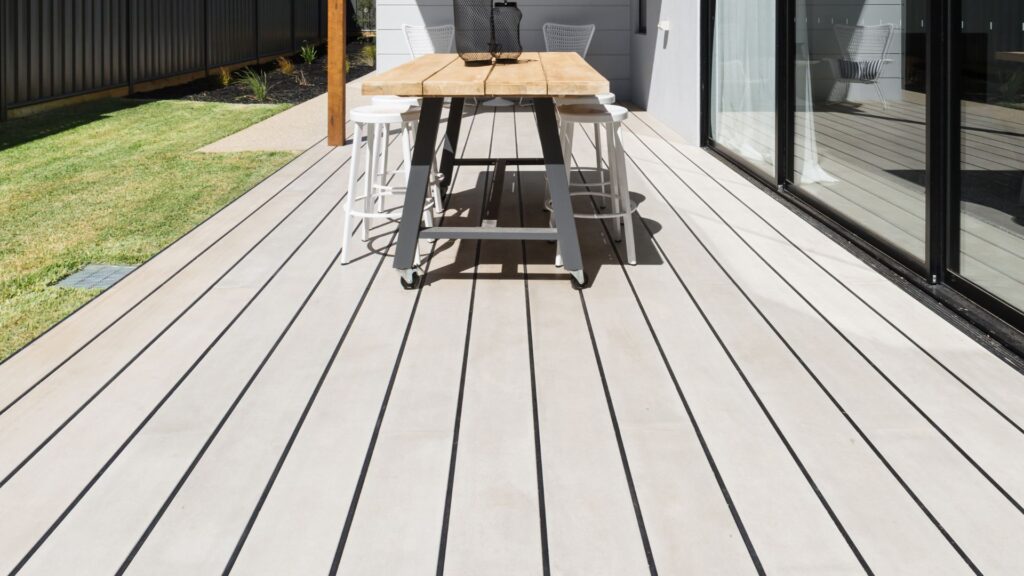
Composite decking generally offers greater resistance to UV exposure because many products contain protective additives designed to reduce fading. Even so, lower-quality composite boards may still experience colour changes after years of direct sunlight exposure.
Common sun-related issues include:
- Colour Fading: Continuous UV exposure can gradually alter the original appearance of decking materials.
- Surface Drying: Timber can lose moisture and become brittle when exposed to intense sunlight.
- Cracking And Splitting: Repeated drying and heating cycles may cause small cracks to develop in certain timber species.
- Surface Wear: UV radiation can weaken exposed fibres, leading to a rougher surface texture over time.
Selecting a decking material with proven UV resistance can significantly improve long-term performance and reduce maintenance requirements.
Rain, Moisture, And Drainage Challenges
While Christchurch is not one of New Zealand’s wettest regions, rainfall and moisture exposure remain important considerations when choosing decking materials. Water can affect both the appearance and structural integrity of a deck if proper precautions are not taken during material selection and installation.
Timber decking naturally absorbs moisture. When wood absorbs water, it expands. As it dries, it contracts. Over time, this repeated movement can contribute to warping, cupping, and surface cracking. Some timber species handle moisture fluctuations better than others, making material selection particularly important.
Moisture can also create conditions that encourage biological growth and deterioration.
Potential moisture-related concerns include:
- Rot Development: Prolonged moisture exposure can lead to timber decay if boards remain wet for extended periods.
- Mould Growth: Damp surfaces may encourage mould growth, particularly in shaded areas.
- Mildew Formation: Moisture combined with limited airflow can result in surface mildew.
- Structural Deterioration: Poor drainage can affect both decking boards and supporting substructures.
Proper installation plays a major role in preventing these issues.
Important installation considerations include:
- Adequate Board Spacing: Allows water to drain efficiently between boards.
- Subfloor Ventilation: Encourages airflow beneath the deck to promote drying.
- Effective Drainage Design: Prevents standing water from accumulating.
- Quality Flashing And Waterproofing: Helps protect adjacent structures from moisture intrusion.
A well-designed deck often performs better than a poorly installed deck regardless of material type.
Coastal Conditions And Salt Air Exposure
Many Christchurch properties are located near the coast or experience varying levels of exposure to salt-laden air. Coastal environments create additional challenges that can accelerate wear on outdoor building materials.
Salt particles carried by wind can settle on deck surfaces and hardware. Over time, these deposits may contribute to corrosion, staining, and premature material deterioration. Coastal conditions can be particularly demanding on fasteners, brackets, and other metal components.
Material performance varies significantly in coastal environments.
Timber species with natural durability often perform well when properly maintained, while high-quality composite decking can offer excellent resistance to moisture and salt exposure. Aluminium decking is also increasingly popular in coastal areas because it resists rust and corrosion.
When building near the coast, homeowners should pay close attention to:
- Fastener Selection: Marine-grade stainless steel fasteners help resist corrosion.
- Material Durability: Some decking materials are better suited to coastal conditions than others.
- Cleaning Requirements: Salt deposits should be removed periodically to protect surfaces.
- Protective Finishes: Appropriate coatings can improve resistance to weather-related wear.
Ignoring coastal conditions can shorten the lifespan of both decking materials and supporting components.
Seasonal Temperature Changes And Frost
Christchurch experiences seasonal temperature fluctuations that can affect decking performance throughout the year. Warm summer days may be followed by cold winter mornings, creating expansion and contraction cycles that place stress on decking materials.
All decking materials expand and contract to some degree as temperatures change. Timber tends to move more noticeably because it responds to both temperature and moisture levels. Composite decking also expands and contracts, although manufacturers often provide specific installation guidelines to accommodate this movement.
Frost presents an additional consideration during colder months. Repeated freeze-thaw cycles can place stress on materials, particularly if moisture becomes trapped within small cracks or gaps.
Potential effects of seasonal temperature changes include:
- Board Movement: Expansion and contraction may alter board spacing.
- Fastener Stress: Repeated movement can place pressure on fixings and connections.
- Surface Cracking: Existing imperfections may worsen over time.
- Reduced Structural Stability: Poor installation can magnify the effects of temperature-related movement.
To minimise these risks, installers should follow manufacturer recommendations regarding spacing, fastener placement, and substructure design. Materials that are specifically engineered for outdoor conditions generally provide greater long-term stability in Christchurch’s changing climate.
Understanding how Christchurch weather affects decking allows homeowners to choose materials that balance appearance, durability, and maintenance. By accounting for UV exposure, moisture, coastal influences, and seasonal temperature changes, it becomes much easier to select a decking solution that will continue performing well and looking attractive for many years.
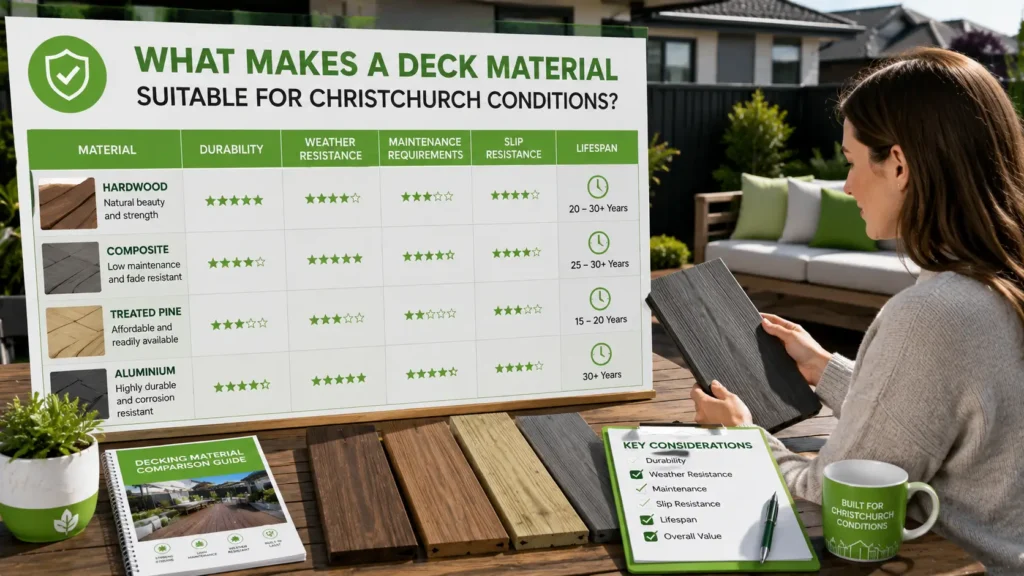
What Makes A Deck Material Suitable For Christchurch Conditions?
Choosing the right decking material for Christchurch is not just about appearance. The local weather can expose a deck to strong sunlight, wet days, frosty mornings, and regular temperature changes. A suitable material should handle these conditions without becoming unsafe, hard to maintain, or expensive to repair.
Durability Against Weather Exposure
A deck in Christchurch needs to cope with moisture, UV rays, and seasonal temperature movement. Materials that absorb too much water can swell, cup, or rot over time, especially if airflow under the deck is poor. Strong sun exposure can also dry out timber, fade colour, and cause surface cracking if the material is not properly protected.
Composite decking, quality hardwoods, and well-treated pine can all perform well when installed correctly. The key is choosing a material that suits the site. A shaded, damp area may need better moisture resistance, while a north-facing deck may need stronger UV protection.
- Moisture Resistance: Choose materials that can handle rain and damp conditions without rapid decay, warping, or mold growth.
- UV Stability: Look for decking that resists fading, surface drying, and sun-related wear.
- Temperature Movement: Allow for expansion and contraction through correct board spacing and fixing methods.
Maintenance Requirements
Every deck needs some level of care, but the amount of maintenance depends on the material. Timber decking usually needs regular cleaning, staining, or oiling to keep it protected from Christchurch’s changing weather. If this care is skipped, timber can lose colour, crack, or become more vulnerable to moisture damage.
Composite decking often needs less ongoing work. It still requires cleaning, but it does not usually need staining or sealing. This makes it a practical choice for homeowners who want a lower-maintenance outdoor space.
- Cleaning Needs: Regular washing helps remove dirt, pollen, moss, and debris that can make the surface slippery.
- Sealing And Staining: Timber decks may need protective coatings to reduce water damage and UV wear.
- Repair Expectations: Softer timbers may dent or mark more easily, while higher-quality materials often offer better long-term performance.
Slip Resistance And Safety
Safety is a major factor when choosing deck materials for Christchurch weather. Wet weather, frost, and shaded areas can make some decking surfaces slippery. This is especially important around steps, entrances, pool areas, and outdoor living spaces used by children or older family members.
The material’s surface texture matters. Smooth timber can become slick when wet if it is not cleaned often. Some composite products include textured finishes that improve grip, but not all boards perform the same. Homeowners should also think about drainage, board spacing, and how much shade the deck receives during winter.
- Wet-Weather Grip: Choose a surface that provides stable footing after rain.
- Frost Safety: Consider how the material performs on cold mornings when frost may settle.
- Surface Care: Keep the deck clean to reduce moss, algae, and slippery build-up.
Long-Term Value And Lifespan
The cheapest decking material is not always the most cost-effective choice. A lower upfront price can look appealing, but ongoing maintenance, repairs, and earlier replacement may increase the total cost over time. For Christchurch homeowners, long-term value depends on how well the material holds up against local weather conditions.
Hardwood and composite decking often cost more at the start, but they may provide better durability and lower lifetime costs when properly chosen and installed. Treated pine can still be a good option for budget-conscious projects, but it usually needs more care to maintain its appearance and performance.
- Upfront Cost: Compare material prices, installation requirements, and fixing systems before choosing.
- Lifetime Cost: Include cleaning, staining, sealing, repairs, and likely replacement timing.
- Practical Lifespan: A well-installed deck made from suitable materials should remain safe, attractive, and functional for many years.
The best deck material for Christchurch conditions is the one that balances weather resistance, safety, maintenance, and value. Before choosing, think about how much sun, rain, shade, and foot traffic your deck will face. A material that suits your property from the start will usually perform better and cost less to manage over time.
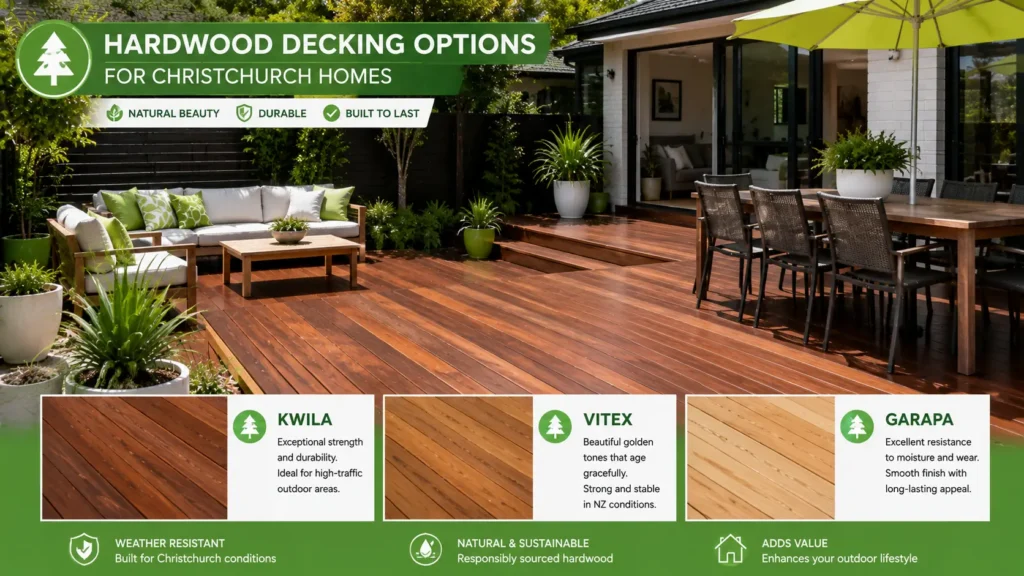
Hardwood Decking Options For Christchurch Homes
Hardwood decking remains one of the most popular choices for Christchurch homeowners who want a deck that combines natural beauty with long-term durability. Christchurch weather can be demanding on outdoor surfaces due to strong sunlight, changing temperatures, moisture, and occasional frosts. Quality hardwood decking performs well in these conditions when properly installed and maintained. While hardwood options often come with a higher upfront cost than softwood alternatives, many homeowners consider the investment worthwhile because of their strength, lifespan, and timeless appearance. Understanding the differences between popular hardwood species can help you choose the right material for your outdoor space.
Kwila Decking
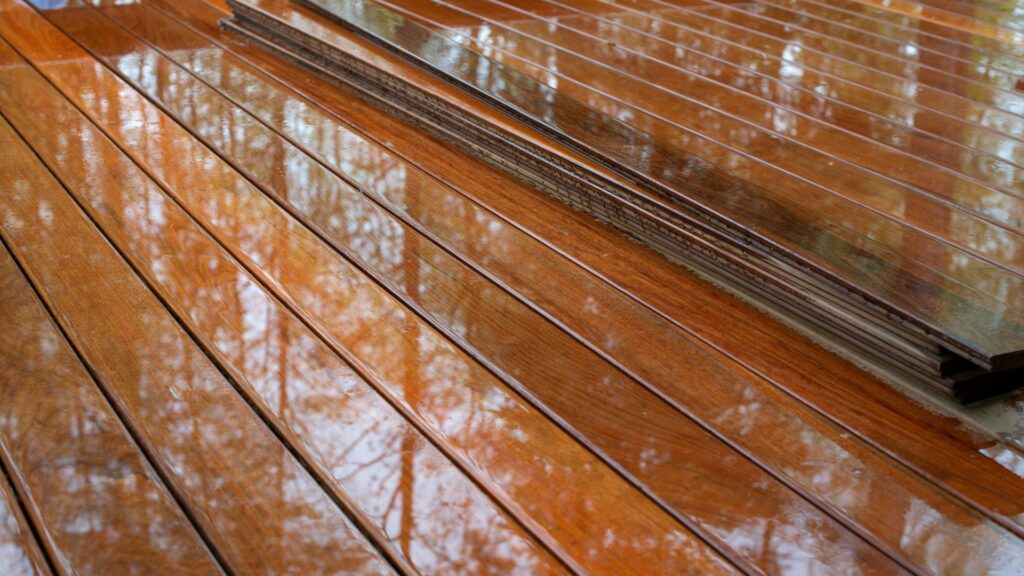
Kwila is one of the most widely used hardwood decking materials in New Zealand. Known for its rich reddish-brown colour and dense grain structure, it provides a premium appearance that suits both traditional and modern homes.
One of Kwila’s biggest strengths is its natural durability. The timber is highly resistant to wear, making it a practical option for decks that experience heavy foot traffic. Its dense structure also helps it withstand Christchurch’s seasonal weather changes better than many softer timber products.
When it comes to weather resistance, Kwila performs well against moisture, sunlight, and temperature fluctuations. However, prolonged exposure to UV rays can cause the timber to fade into a silver-grey colour over time if it is not treated with protective oils. Some homeowners appreciate this weathered appearance, while others prefer to maintain the original colour through regular maintenance.
Maintenance requirements for Kwila are relatively straightforward but should not be overlooked. To preserve its appearance and maximise lifespan, periodic cleaning and oiling are recommended.
- Strength: Dense hardwood construction offers excellent durability and resistance to daily wear.
- Weather Performance: Handles Christchurch’s changing climate well when properly maintained.
- Appearance: Rich natural colouring creates a premium outdoor living space.
- Maintenance Requirement: Regular cleaning and oiling help preserve colour and protect the timber.
- Potential Drawback: Initial costs are generally higher than treated pine decking.
Vitex Decking
Vitex has become an increasingly popular decking option for homeowners seeking a hardwood that balances durability with a lighter and more contemporary appearance. Its pale golden-brown colouring creates a clean and inviting look that complements a wide range of architectural styles.
One advantage of Vitex is its stability. The timber is known for experiencing less movement than some other hardwood species, which can help reduce the risk of warping or distortion over time. This characteristic is particularly valuable in regions where temperatures and moisture levels fluctuate throughout the year.
Vitex performs well in Christchurch weather and offers good resistance to moisture, decay, and insect activity. Its smooth texture also makes it comfortable underfoot, making it a popular choice for family outdoor areas.
For residential properties, Vitex offers a strong combination of aesthetics and performance. It works well for entertaining spaces, pool surrounds, and elevated decks where visual appeal is just as important as durability.
- Modern Appearance: Light natural tones suit both contemporary and classic homes.
- Dimensional Stability: Less movement can contribute to a more stable deck surface.
- Comfort: Smooth finish provides a pleasant underfoot experience.
- Residential Suitability: Ideal for outdoor entertaining and family living spaces.
- Maintenance Needs: Benefits from periodic cleaning and protective treatments.
Garapa Decking
Garapa is another hardwood option that performs exceptionally well in demanding outdoor environments. It is recognised for its golden honey-coloured appearance and strong resistance to environmental stress.
One of Garapa’s standout qualities is its durability. The timber naturally resists decay, insect damage, and general wear, making it suitable for high-use outdoor areas. Many homeowners appreciate that Garapa can maintain its structural integrity for many years when properly cared for.
Colour retention is another notable advantage. Although all natural timber will experience some weathering over time, Garapa tends to maintain an attractive appearance with routine maintenance. Homeowners who apply protective oils regularly can often preserve much of the timber’s original warmth and character.
Christchurch’s moisture levels and changing weather conditions are generally well tolerated by Garapa. Its dense composition limits moisture absorption, reducing the likelihood of swelling, shrinking, or premature deterioration.
- Durability: Strong resistance to wear, impact, and environmental exposure.
- Moisture Resistance: Dense structure helps minimise water absorption.
- Visual Appeal: Attractive golden colouring enhances outdoor spaces.
- Longevity: Can provide decades of service with appropriate maintenance.
- Investment Value: Higher initial cost may be offset by long-term performance.
Pros And Cons Of Hardwood Decking
Hardwood decking offers many advantages for Christchurch homeowners, particularly those looking for a balance between natural beauty and long-term durability. However, it is important to understand both the benefits and limitations before making a final decision.
Benefits
Hardwood decking is widely regarded as one of the most durable decking categories available. Its dense structure helps it withstand heavy use, challenging weather conditions, and general aging more effectively than many softer timber alternatives.
- Long Lifespan: Quality hardwood decking can last for decades with proper care.
- Natural Beauty: Rich colours and grain patterns create a premium appearance.
- Weather Resistance: Performs well against sunlight, moisture, and temperature changes.
- Property Appeal: High-quality decking can enhance outdoor living areas and overall property value.
- Structural Strength: Suitable for high-traffic residential and entertaining spaces.
Potential Drawbacks
While hardwood decking offers many benefits, there are factors homeowners should consider before committing to a specific material.
- Higher Upfront Cost: Hardwood products typically cost more than softwood alternatives.
- Regular Maintenance: Oiling and cleaning are often needed to maintain appearance.
- Weathering: Natural colour changes can occur without protective treatments.
- Installation Complexity: Dense timber may require specialist tools and installation techniques.
Best Use Cases
Hardwood decking is particularly well suited to homeowners who value long-term performance and natural aesthetics. It works well in both modern and traditional outdoor settings and can handle Christchurch’s climate when maintained appropriately.
- Premium Outdoor Living Areas: Creates an attractive space for entertaining and relaxation.
- Family Homes: Provides strength and durability for regular use.
- High-Exposure Locations: Performs well in areas exposed to sunlight and weather.
- Long-Term Property Investments: Suitable for homeowners focused on durability and lasting value.
Choosing the right hardwood decking material depends on your budget, maintenance expectations, and design preferences. Whether you prefer the rich appearance of Kwila, the contemporary appeal of Vitex, or the durability of Garapa, each option offers distinct advantages that can help create a deck capable of performing well in Christchurch’s challenging weather conditions for many years.
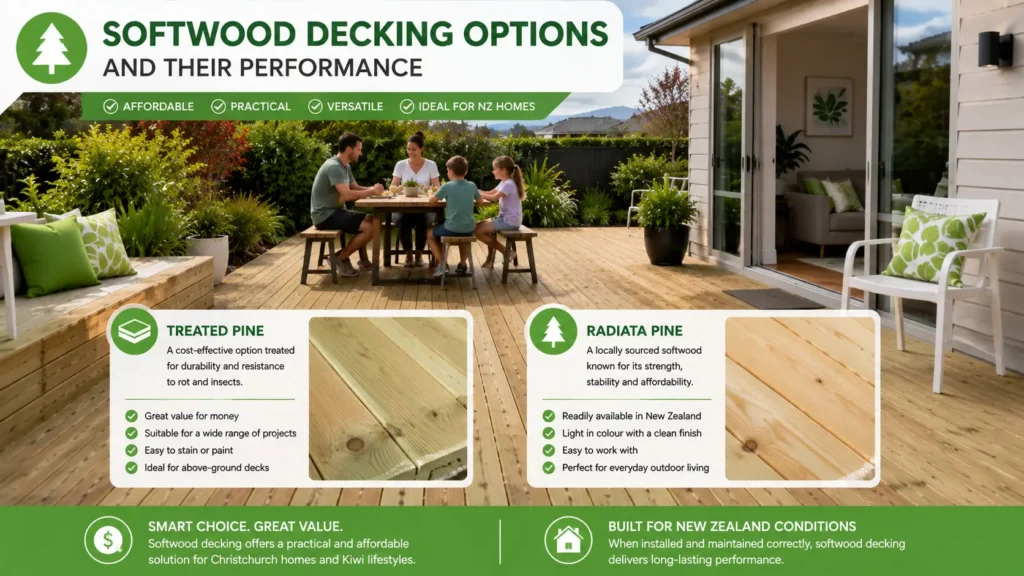
Softwood Decking Options And Their Performance
Softwood decking remains one of the most popular choices for Christchurch homeowners because it offers an attractive balance between cost, appearance, and practicality. Many outdoor living areas throughout New Zealand are built using softwood products due to their affordability and wide availability. While softwood decking generally requires more ongoing care than hardwood or composite alternatives, modern treatment processes have improved its durability and suitability for local weather conditions. Understanding how different softwood options perform can help homeowners choose a decking material that aligns with their budget, maintenance expectations, and long-term plans.
Treated Pine Decking
Treated pine is one of the most commonly used decking materials in New Zealand. It is widely available, cost-effective, and suitable for a broad range of residential decking projects. The treatment process helps protect the timber from fungal decay, insect damage, and moisture-related deterioration, making it a practical option for outdoor use.
One of the main reasons homeowners choose treated pine decking is affordability. Compared to hardwood decking and many composite products, treated pine provides a lower upfront investment while still delivering a functional and attractive outdoor space. This makes it particularly appealing for larger decks where material costs can quickly add up.
Maintenance plays an important role in the long-term performance of treated pine. Although the timber is treated for outdoor exposure, it still benefits from regular care to maintain its appearance and structural integrity.
- Cleaning Requirements: Dirt, leaves, and debris should be removed regularly to prevent moisture build-up and surface staining.
- Protective Coatings: Applying stains or decking oils helps protect the timber from UV exposure and reduces the risk of cracking or splitting.
- Routine Inspections: Checking for loose boards, fasteners, or signs of wear can help identify minor issues before they become costly repairs.
With proper installation and ongoing maintenance, treated pine decking can provide reliable performance for many years. Most well-maintained treated pine decks can last between 15 and 20 years, although lifespan may vary depending on exposure to sunlight, rainfall, drainage conditions, and maintenance practices.
Radiata Pine For Outdoor Spaces
Radiata pine is another widely used softwood species for outdoor decking applications across New Zealand. It is commonly chosen because it grows locally, is readily available, and responds well to timber treatment processes that improve its durability.
Many residential decking projects use treated Radiata pine due to its versatility and ease of installation. The timber is relatively lightweight, making it easier to cut, shape, and fit compared to some denser hardwood alternatives. This can help reduce labour time during construction while providing a clean and attractive finish.
Radiata pine is often used for:
- Residential Decking: Outdoor entertaining areas, patios, and backyard decks.
- Garden Structures: Walkways, pergolas, seating areas, and landscape features.
- Home Improvement Projects: Cost-effective outdoor upgrades that require durable timber.
When considering Radiata pine for Christchurch weather conditions, it is important to understand its weather resistance characteristics. While treated Radiata pine performs well outdoors, it remains a natural timber product that reacts to environmental conditions.
- Moisture Exposure: Proper drainage and ventilation help prevent excessive moisture retention.
- UV Exposure: Sunlight can cause weathering and colour fading if protective coatings are not maintained.
- Temperature Changes: Seasonal expansion and contraction may occur, making correct installation spacing important.
Regular maintenance helps preserve the appearance and performance of Radiata pine decking. Homeowners who maintain protective finishes and keep the deck clean often achieve significantly better long-term results.
Pros And Cons Of Softwood Decking
Softwood decking continues to be a practical solution for many Christchurch properties because it offers several advantages while also requiring some trade-offs. Understanding both sides helps homeowners make informed decisions based on their specific needs.
One of the strongest benefits of softwood decking is affordability. It provides access to a functional and attractive outdoor living space without the higher costs often associated with hardwood or composite materials.
- Budget-Friendly Pricing: Lower material costs make larger decking projects more achievable.
- Wide Availability: Softwood products are readily available from most building suppliers throughout New Zealand.
- Easy Installation: Lighter weight timber is generally easier to work with during construction.
- Natural Appearance: Softwood offers a warm and traditional timber look that complements many home styles.
- Repair Flexibility: Individual boards can often be replaced without major disruption to the entire deck.
While these advantages make softwood decking appealing, homeowners should also consider the ongoing maintenance requirements that come with natural timber.
- Regular Maintenance: Cleaning, staining, and sealing may be required to maintain appearance and durability.
- Potential Weathering: Exposure to sun, rain, and frost can gradually affect the timber surface.
- Shorter Lifespan Than Some Alternatives: Softwood generally does not last as long as premium hardwood or composite products.
- Moisture Sensitivity: Poor drainage or neglected maintenance can increase the risk of timber deterioration.
For many Christchurch homeowners, softwood decking remains a sensible choice because it delivers excellent value while providing the natural character that many people prefer in outdoor living spaces. The key to achieving long-lasting performance lies in selecting quality materials, ensuring proper installation, and committing to a consistent maintenance routine.
Softwood decking offers an attractive combination of affordability, accessibility, and natural appeal, making it a popular choice for outdoor spaces throughout Christchurch. Whether selecting treated pine or Radiata pine, homeowners who understand the maintenance requirements and weather-related considerations can enjoy a durable and functional deck that performs well for years to come.
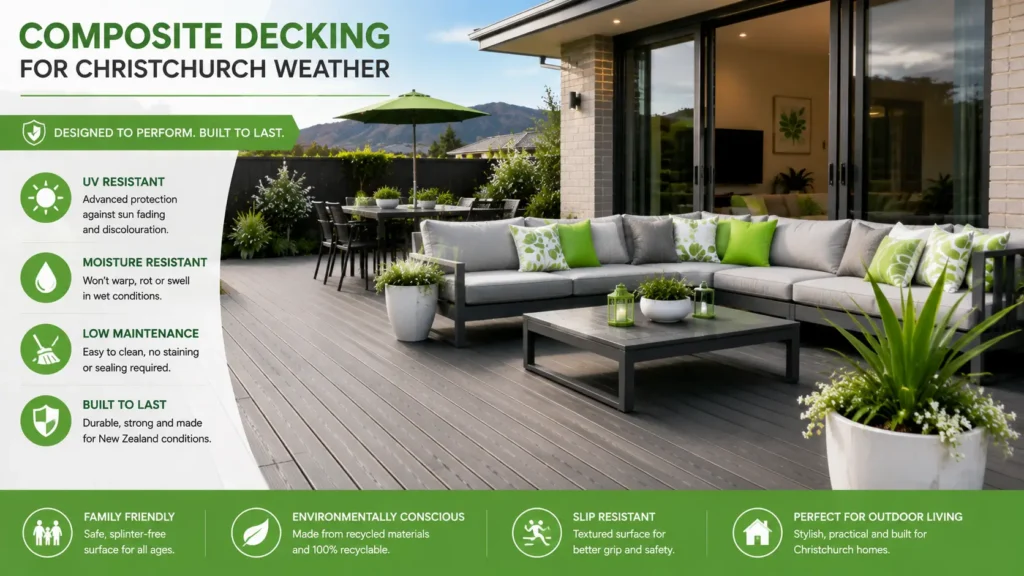
Composite Decking For Christchurch Weather
Composite decking has become one of the most popular choices for Christchurch homeowners who want a durable and low-maintenance outdoor surface. With the city experiencing strong sunlight, seasonal rainfall, occasional frost, and coastal influences in some areas, choosing a decking material that can withstand changing conditions is important. Composite decking is designed to offer long-lasting performance while reducing many of the maintenance demands associated with traditional timber decking. Understanding how composite decking is made, its benefits, potential limitations, and quality differences can help homeowners make an informed investment.
What Is Composite Decking?
Composite decking is a manufactured decking product made from a combination of recycled wood fibres and plastic materials. These ingredients are blended together to create boards that replicate the appearance of natural timber while offering improved resistance to moisture, fading, and decay.
Unlike traditional timber decking, composite boards do not contain solid wood throughout their structure. The plastic component helps reduce water absorption, while the wood fibres contribute to a more natural appearance and texture. Modern composite decking products are available in a wide range of colours, grain patterns, and finishes, allowing homeowners to achieve different design styles without sacrificing durability.
Many manufacturers have also improved their production methods over the years, resulting in boards that better mimic the look of real timber while delivering stronger weather resistance and longer service life. For Christchurch properties that experience varying weather conditions throughout the year, composite decking offers a practical balance between appearance and performance.
Benefits Of Composite Decking In Christchurch
Christchurch weather can place considerable stress on outdoor building materials. Composite decking is specifically engineered to address many of these challenges, making it an attractive option for homeowners seeking a reliable decking solution.
Moisture Resistance
One of the biggest advantages of composite decking is its resistance to moisture. Traditional timber can absorb water over time, which may lead to swelling, warping, cracking, or rot. Composite decking is far less susceptible to these issues because its plastic content helps prevent excessive water penetration.
This moisture resistance is particularly beneficial during wet seasons when decks are regularly exposed to rain, morning dew, and damp conditions. It also makes composite decking suitable for homes located near coastal areas where moisture levels may be higher.
Reduced Maintenance
Many Christchurch homeowners choose composite decking because it requires significantly less maintenance than natural timber. Traditional wooden decks often need regular staining, sealing, or painting to maintain their appearance and protect them from weather-related damage.
Composite decking eliminates much of this ongoing work.
- No Regular Staining: Most composite boards maintain their appearance without requiring annual staining or oiling.
- Simple Cleaning: Routine washing with water and mild detergent is usually enough to remove dirt and surface debris.
- Reduced Repair Needs: Composite boards are less likely to split, crack, or develop structural issues that require frequent repairs.
For busy homeowners, this lower-maintenance approach can save considerable time and effort over the lifespan of the deck.
UV Performance
Christchurch receives strong sunlight throughout much of the year, and prolonged UV exposure can be harsh on outdoor surfaces. Traditional timber often fades, dries out, or develops surface cracks when exposed to intense sunlight without proper protection.
Many premium composite decking products are manufactured with UV-resistant technology that helps minimise fading and surface deterioration. While some gradual colour change may occur during the first few months after installation, quality composite decking generally retains its appearance much better than untreated timber.
Colour Stability
Maintaining a consistent appearance is important for many homeowners investing in a new outdoor living space. Composite decking is available in a variety of colours and finishes that are designed to remain stable over time.
- Consistent Appearance: Colour is integrated throughout the manufacturing process.
- Reduced Fading: Quality products are engineered to resist excessive sun-related discolouration.
- Long-Term Visual Appeal: Decks maintain a cleaner and more uniform appearance for many years.
This colour stability can be particularly appealing for homeowners who want a polished outdoor space without frequent refinishing.
Potential Drawbacks To Consider
While composite decking offers many advantages, it is important to understand its limitations before making a final decision. Every decking material involves trade-offs, and composite products are no exception.
Initial Investment
One of the most common concerns with composite decking is its higher upfront cost. Compared to treated pine and some other timber options, composite boards generally require a larger initial investment.
However, it is important to consider long-term ownership costs rather than focusing solely on purchase price. Lower maintenance requirements, fewer repairs, and longer lifespan can help offset the higher installation costs over time.
Homeowners should compare both the initial expense and ongoing maintenance obligations when evaluating different decking materials.
Surface Temperature In Direct Sunlight
Composite decking can become warmer than natural timber when exposed to direct sunlight for extended periods. Darker-coloured boards tend to absorb more heat, which may make the surface less comfortable to walk on barefoot during hot summer afternoons.
Several factors can influence deck temperature:
- Board Colour: Lighter colours generally stay cooler than darker tones.
- Sun Exposure: Fully exposed decks receive more direct heat.
- Product Design: Some premium brands include heat-reduction technologies.
For properties with significant sun exposure, selecting lighter-coloured boards may help improve comfort levels during warmer months.
Comparing Composite Brands And Quality Levels
Not all composite decking products perform at the same level. Significant differences can exist between manufacturers in terms of durability, appearance, warranty coverage, and overall quality.
Before purchasing composite decking, homeowners should carefully evaluate several key factors.
- Material Composition: Higher-quality products often contain better-balanced wood and plastic blends.
- Protective Capping: Capped composite boards include an additional protective layer that improves stain resistance and weather protection.
- Warranty Coverage: Longer warranties often indicate greater manufacturer confidence in product performance.
- Slip Resistance: Surface texture can affect safety during wet conditions.
- Colour Options: Premium brands typically offer a broader selection of colours and realistic timber finishes.
- Product Reputation: Independent reviews and long-term performance records can provide valuable insights.
It is also worth requesting product samples before making a final choice. Viewing samples outdoors under natural light can help homeowners better understand colour variations, texture, and overall appearance.
Composite decking continues to gain popularity across Christchurch because it offers a practical combination of durability, appearance, and low maintenance. While it may require a larger upfront investment than some timber alternatives, many homeowners find that the long-term benefits make it a worthwhile choice for creating an attractive outdoor space that performs well in Christchurch’s demanding weather conditions.
For homeowners seeking a decking material that balances visual appeal with long-term durability, composite decking remains one of the strongest options available. By carefully comparing product quality, understanding maintenance expectations, and considering site-specific conditions, it is possible to select a decking solution that delivers lasting value and reliable performance for many years.
Aluminium And Alternative Decking Materials
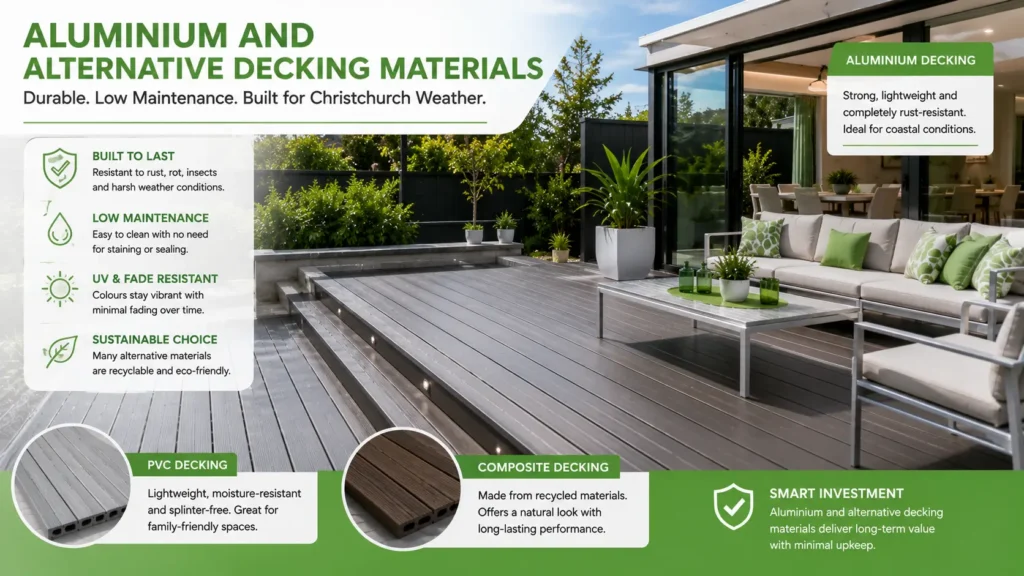
While timber and composite decking remain popular choices for many homeowners, alternative decking materials are becoming more common due to their durability, low-maintenance requirements, and ability to perform well in challenging weather conditions. In Christchurch, where decks are exposed to strong sunlight, rain, frost, and in some areas coastal salt air, non-timber options can provide practical benefits that appeal to homeowners seeking long-term performance with less ongoing upkeep. Understanding the strengths and limitations of these materials can help you determine whether they are the right fit for your outdoor space.
Aluminium Decking
Aluminium decking is one of the most durable decking solutions available and is increasingly being used in residential and commercial outdoor spaces. Unlike traditional timber products, aluminium is designed to withstand harsh weather conditions without suffering from many of the issues commonly associated with wood.
One of the biggest advantages of aluminium decking is its exceptional weather resistance. It does not absorb moisture, which means it will not rot, swell, crack, or warp when exposed to rain or damp conditions. This makes it particularly valuable in areas where decks experience regular moisture exposure throughout the year.
The material also performs exceptionally well under UV exposure. Prolonged sunlight can cause some decking materials to fade, dry out, or deteriorate over time, but aluminium maintains its structural integrity and appearance with minimal change. This durability can result in fewer repairs and replacements throughout the deck’s lifespan.
Some of the key benefits of aluminium decking include:
- Exceptional Durability: Aluminium is resistant to cracking, splitting, warping, and other forms of weather-related damage.
- Low Maintenance Requirements: Regular cleaning is generally all that is required to keep the surface looking presentable.
- Long Service Life: Many aluminium decking systems can remain functional for decades with minimal deterioration.
- Structural Stability: Aluminium is less affected by temperature fluctuations than many traditional decking materials.
Another important advantage is fire resistance. Aluminium is non-combustible, making it an attractive option for homeowners who prioritise safety. While fire risks vary by location, a non-combustible decking surface can provide added peace of mind.
Corrosion resistance is another reason aluminium performs well in Christchurch conditions. Many aluminium decking products are manufactured with protective coatings designed to resist corrosion, even in coastal environments where salt-laden air can accelerate wear on other materials.
PVC Decking Options
PVC decking is another alternative that has gained popularity among homeowners seeking a low-maintenance outdoor living solution. Made entirely from synthetic materials, PVC decking is designed to provide durability and weather resistance without the maintenance requirements associated with natural timber.
One of the biggest advantages of PVC decking is its ability to resist moisture. Because the material does not absorb water, it is highly resistant to rot, mold, mildew, and insect damage. This characteristic makes it particularly suitable for outdoor areas that experience regular rainfall or prolonged damp conditions.
PVC decking is often chosen by homeowners who want to minimise ongoing maintenance. Unlike many timber products, it does not require staining, sealing, or painting to maintain its performance. Routine washing is typically sufficient to remove dirt and debris.
Some notable benefits of PVC decking include:
- Excellent Moisture Resistance: Water absorption is minimal, reducing the risk of moisture-related deterioration.
- Minimal Maintenance: Regular cleaning is usually the only maintenance requirement.
- Consistent Appearance: PVC decking is manufactured with uniform colours and finishes that remain visually consistent.
- Insect Resistance: The synthetic composition prevents damage from termites and other wood-boring pests.
PVC decking can also be a practical choice around swimming pools, spas, and outdoor entertaining areas where water exposure is common. Many products include textured finishes designed to improve slip resistance when the surface is wet.
Homeowners should still compare product quality carefully. Higher-quality PVC products generally provide better colour retention, stronger structural performance, and improved resistance to fading caused by UV exposure.
Are Alternative Materials Worth Considering?
Alternative decking materials are not automatically the best solution for every property, but they can be an excellent choice in specific situations. The right material often depends on the homeowner’s priorities, budget, maintenance expectations, and local environmental conditions.
Non-timber decking products are often worth considering when long-term durability and low maintenance are key goals. Homeowners who do not want to spend time staining, sealing, or repairing timber may find aluminium or PVC decking more appealing than traditional wood options.
Alternative materials may be particularly suitable in the following situations:
- Coastal Properties: Salt air can accelerate deterioration in some materials, making corrosion-resistant products attractive.
- High-Moisture Areas: Decks exposed to frequent rain or poor drying conditions can benefit from moisture-resistant materials.
- Low-Maintenance Lifestyles: Homeowners seeking minimal upkeep often prefer synthetic or metal decking options.
- Commercial Applications: High-traffic environments frequently require materials capable of handling heavy use with limited maintenance.
- Long-Term Ownership Plans: Property owners intending to stay in their home for many years may appreciate the extended lifespan offered by premium alternative materials.
That said, appearance remains an important consideration. Many homeowners still prefer the warmth and natural character of timber decking. While modern aluminium and PVC products have improved significantly in design and finish, some people continue to favour the authentic look and feel of natural wood.
Choosing the right decking material ultimately involves balancing appearance, maintenance, performance, and budget. By carefully evaluating how each material responds to Christchurch’s climate conditions, homeowners can make a decision that supports both their lifestyle and long-term property goals.
Alternative decking materials offer practical solutions for homeowners seeking durability, weather resistance, and reduced maintenance. Whether you are considering aluminium for its strength and fire resistance or PVC for its moisture resistance and ease of care, understanding the benefits of each option can help you choose a decking material that performs reliably in Christchurch’s changing weather conditions for many years to come.
Comparing The Best Deck Materials For Christchurch Weather
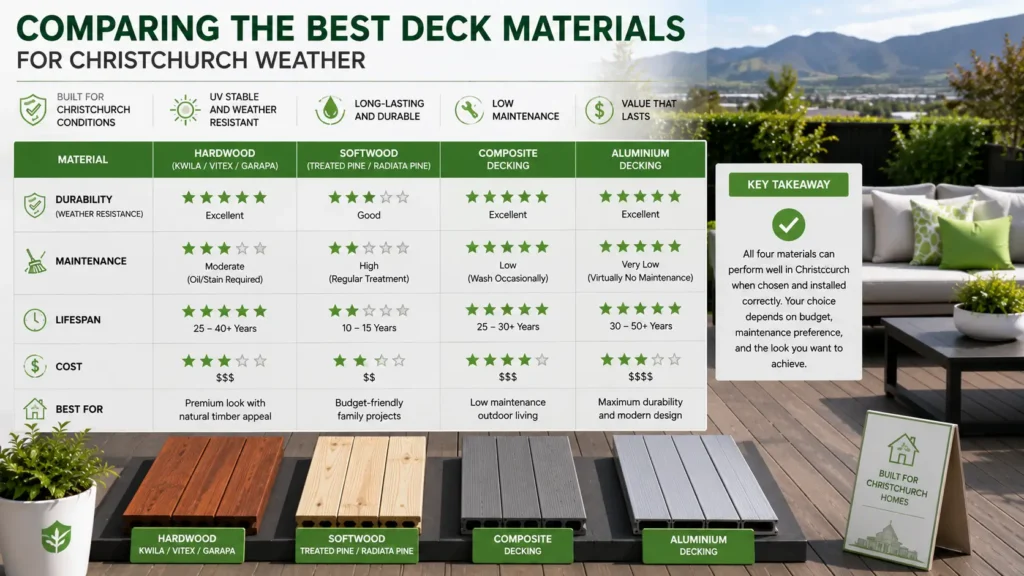
Choosing the right decking material involves more than comparing appearances or upfront costs. Christchurch homeowners need to consider how different materials perform under local weather conditions, how much maintenance they require, how long they are likely to last, and whether they offer good value over time. Timber, composite, and aluminium decking each have strengths and limitations, making it important to understand how they compare before making a final decision.
Weather Resistance Comparison
Weather resistance is one of the most important factors when selecting decking for Christchurch properties. Exposure to strong sunlight, moisture, frost, and seasonal temperature changes can affect both the appearance and structural integrity of a deck over time.
Timber decking offers a natural look that many homeowners prefer, but its performance depends heavily on the species chosen and the level of maintenance provided. Hardwoods such as Kwila and Vitex generally offer better weather resistance than softwoods, although they still require regular care to protect against fading, moisture absorption, and surface cracking.
Composite decking is specifically designed to resist many of the challenges associated with outdoor environments. Because it combines wood fibres with plastic-based materials, it is less susceptible to rot, warping, and moisture-related damage. Many composite products also include UV-resistant technology that helps minimise fading from sun exposure.
Aluminium decking provides the highest level of weather resistance among the three options. It does not absorb moisture, rot, crack, or warp, making it particularly suitable for properties exposed to coastal conditions or extreme weather. Its corrosion-resistant properties also contribute to long-term performance.
- Timber Decking: Offers natural beauty but requires protection from moisture and UV exposure.
- Composite Decking: Provides strong resistance to weather-related wear with minimal deterioration.
- Aluminium Decking: Delivers exceptional durability and remains unaffected by most weather conditions.
Maintenance Comparison
Maintenance requirements vary significantly between decking materials and can have a major impact on long-term ownership costs and convenience.
Timber decking generally requires the most upkeep. Regular cleaning, staining, oiling, or sealing may be necessary to maintain its appearance and protect it from environmental damage. Neglecting maintenance can lead to fading, splitting, mold growth, and premature deterioration.
Composite decking is often chosen by homeowners looking for a low-maintenance solution. While occasional washing is recommended to remove dirt and debris, it does not typically require staining, sealing, or painting. This can save considerable time and effort over the life of the deck.
Aluminium decking requires the least maintenance of all. Periodic cleaning is usually sufficient to keep the surface looking presentable. Because it does not suffer from rot, insect damage, or moisture-related issues, ongoing maintenance demands remain very low.
- Timber Decking: Requires ongoing cleaning and protective treatments.
- Composite Decking: Needs occasional washing with minimal additional upkeep.
- Aluminium Decking: Requires little more than routine cleaning.
Lifespan Comparison
The expected lifespan of decking materials can vary based on product quality, installation standards, exposure conditions, and maintenance practices.
Well-maintained hardwood decking can last 25 years or more. Some premium hardwood species may exceed this lifespan when properly cared for. Softwood options such as treated pine generally have a shorter service life but can still perform well when maintained consistently.
Composite decking products commonly offer lifespans ranging from 25 to 30 years or longer. Because they are less vulnerable to moisture damage and insect activity, they often maintain their appearance and structural integrity for extended periods.
Aluminium decking can last several decades with minimal deterioration. Its resistance to weather, corrosion, and physical wear makes it one of the longest-lasting decking solutions available.
- Hardwood Timber: Commonly lasts 25 years or more with proper maintenance.
- Composite Decking: Often delivers 25 to 30 years of reliable performance.
- Aluminium Decking: Can provide several decades of service with minimal degradation.
Cost Comparison
When comparing decking materials, it is important to look beyond the initial purchase price and consider total ownership costs over time.
Treated pine is often the most affordable option upfront, making it attractive for budget-conscious homeowners. However, ongoing maintenance costs can accumulate over the years, particularly when regular staining and repairs are required.
Hardwood decking typically involves a higher initial investment. The additional cost reflects the material’s durability, appearance, and natural resistance to wear. For many homeowners, the premium finish justifies the higher price.
Composite decking usually falls within the mid-to-high price range. Although installation costs may be higher than timber alternatives, reduced maintenance expenses can improve long-term value.
Aluminium decking generally carries the highest upfront cost. Despite this, its exceptional durability and low-maintenance characteristics can make it a cost-effective solution over the long term.
- Treated Pine: Lower upfront cost but higher maintenance expenses over time.
- Hardwood Timber: Higher initial investment with strong visual appeal and durability.
- Composite Decking: Balanced combination of performance and long-term value.
- Aluminium Decking: Premium cost offset by outstanding lifespan and minimal upkeep.
Sustainability And Environmental Considerations
Many homeowners are becoming more conscious of the environmental impact of building materials. Decking choices can influence resource consumption, waste generation, and long-term sustainability outcomes.
Responsibly sourced timber remains one of the most environmentally friendly decking materials when harvested from certified and sustainably managed forests. Products carrying recognised forestry certifications provide greater confidence that responsible practices have been followed.
Composite decking often incorporates recycled materials, including reclaimed wood fibres and recycled plastics. This can reduce landfill waste and lessen the demand for new raw materials. However, the environmental impact varies depending on the manufacturing process and product composition.
Aluminium decking is highly recyclable and can often be recycled multiple times without significant loss of quality. While aluminium production requires considerable energy, its long lifespan and recyclability contribute to its sustainability credentials.
- Certified Timber: Supports responsible forestry and renewable resource management.
- Composite Decking: Frequently contains recycled content that reduces material waste.
- Aluminium Decking: Offers excellent recyclability and long-term resource efficiency.
- Product Longevity: Longer-lasting materials generally reduce replacement frequency and waste generation.
Selecting the best decking material for Christchurch weather ultimately comes down to balancing performance, maintenance, lifespan, cost, and environmental considerations. By understanding how timber, composite, and aluminium decking compare across these key areas, homeowners can make informed decisions that deliver lasting value and create outdoor spaces designed to perform well for many years.
Choosing The Right Deck Material For Your Property
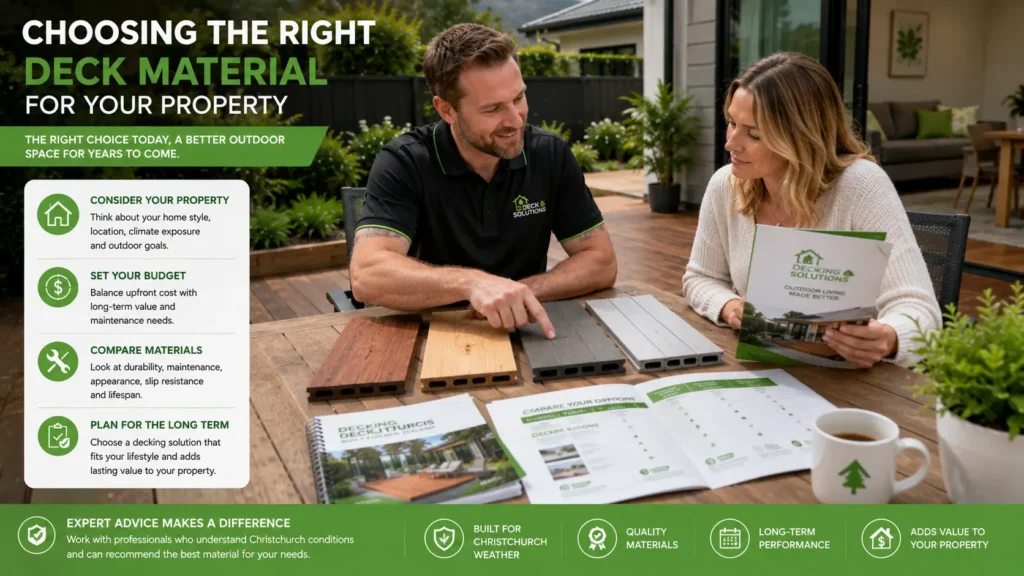
Selecting the right deck material involves more than comparing prices or choosing a colour that suits your home. Christchurch properties face a range of environmental conditions, including strong sunlight, seasonal rainfall, frosty winters, and in some locations, exposure to coastal salt air. The best decking material for your property should match your maintenance expectations, budget, aesthetic preferences, and the specific conditions of your site. Understanding how different materials perform over time can help you make a decision that delivers both durability and long-term satisfaction.
Best Decking Material For Coastal Christchurch Homes
Properties located near the coast face additional challenges that inland homes may not experience. Salt-laden air, higher humidity levels, and increased moisture exposure can accelerate wear on some decking materials. Choosing a deck material that can withstand these conditions is essential for preserving its appearance and structural integrity.
Composite decking is often considered one of the strongest options for coastal environments. Because it does not absorb water like traditional timber, it is less likely to experience swelling, warping, or rot. Many premium composite products are also designed to resist fading caused by prolonged UV exposure.
Certain hardwood species, including Kwila and Vitex, also perform well in coastal areas due to their natural density and resistance to moisture. These timbers have been used successfully in outdoor environments for many years, although they still benefit from routine maintenance to preserve their appearance.
When building near the coast, it is also important to consider the hardware used throughout the deck.
- Marine-Grade Fixings: Stainless steel fixings provide better resistance against corrosion caused by salt exposure.
- Proper Drainage: Effective drainage helps prevent standing water from accelerating wear on decking materials.
- Regular Cleaning: Removing salt deposits can help extend the lifespan of both decking boards and structural components.
For homeowners in coastal Christchurch suburbs, investing in weather-resistant materials can significantly reduce future maintenance requirements and replacement costs.
Best Decking Material For Low Maintenance
Many homeowners want an outdoor living space that looks great without requiring frequent upkeep. If reducing maintenance is a priority, material selection becomes one of the most important decisions during the planning stage.
Composite decking is widely regarded as one of the lowest-maintenance decking options available. Unlike timber, it does not require regular staining, oiling, or sealing. Most composite decks can be maintained with simple washing to remove dirt, leaves, and surface debris.
Aluminium decking is another low-maintenance solution. It resists rust, insect damage, and moisture-related deterioration while requiring very little ongoing care. Although less common in residential settings, it can be a practical choice for homeowners prioritising durability and minimal upkeep.
Treated pine and hardwood decking generally require more attention to maintain their appearance and weather resistance.
- Composite Decking: Requires periodic cleaning and minimal ongoing maintenance.
- Aluminium Decking: Offers excellent durability with very limited maintenance needs.
- Hardwood Decking: Benefits from regular oiling to maintain colour and protection.
- Treated Pine Decking: Requires staining or sealing at recommended intervals.
While low-maintenance materials often have higher upfront costs, many homeowners find the reduced labour and maintenance expenses worthwhile over the life of the deck.
Best Decking Material For Natural Appearance
For many Christchurch homeowners, the visual appeal of natural timber remains difficult to match. Timber decking creates warmth, character, and a connection to the surrounding landscape that many people value when designing outdoor spaces.
Hardwood decking species such as Kwila, Vitex, and Garapa are popular choices for homeowners seeking a premium natural finish. These timbers display distinctive grain patterns and rich colours that develop character over time. With proper care, hardwood decks can maintain their appearance for decades.
Treated pine remains another common option for those seeking a traditional timber look at a lower price point. Pine can be stained in a variety of colours, allowing homeowners to customize its appearance to suit different architectural styles.
When evaluating natural timber options, it is important to consider how weather exposure affects appearance over time.
- Kwila: Known for its rich brown tones and dense structure.
- Vitex: Offers a lighter appearance with strong durability.
- Garapa: Features a golden colour and good resistance to weather exposure.
- Treated Pine: Provides affordability and flexibility through stains and finishes.
Many homeowners appreciate that timber develops a natural patina as it ages, although maintaining its original colour usually requires periodic treatment and care.
Best Decking Material For Long-Term Value
The cheapest decking material is not always the most economical choice over the life of the deck. Long-term value comes from balancing installation costs, maintenance expenses, durability, and expected lifespan.
Composite decking often delivers strong long-term value because it combines durability with minimal maintenance requirements. Although the initial investment is typically higher than treated pine, the reduced need for staining, sealing, and repairs can offset the difference over time.
Hardwood decking can also provide excellent long-term value when properly maintained. High-quality hardwoods are known for their strength and longevity, making them a popular choice for homeowners seeking a premium outdoor living area.
Treated pine remains attractive for budget-conscious projects due to its lower installation costs. However, ongoing maintenance requirements and a shorter lifespan may increase ownership costs over time.
When assessing long-term value, homeowners should consider several factors.
- Initial Cost: The upfront investment required for materials and installation.
- Maintenance Expenses: The cost of cleaning, sealing, staining, and repairs over time.
- Expected Lifespan: How long the material is likely to perform effectively.
- Appearance Retention: How well the material maintains its visual appeal.
- Replacement Risk: The likelihood of needing major repairs or replacement in the future.
A deck is a long-term investment that should continue to add value and enjoyment to your property for many years. Taking the time to compare performance, maintenance requirements, and durability can help you select a material that delivers the best overall return rather than simply the lowest purchase price.
The right deck material depends on your property’s location, your preferred level of maintenance, and the appearance you want to achieve. Whether you prioritise coastal durability, natural timber aesthetics, low-maintenance performance, or long-term value, understanding how each material performs in Christchurch’s climate will help you make a confident and informed decision that supports years of outdoor enjoyment.
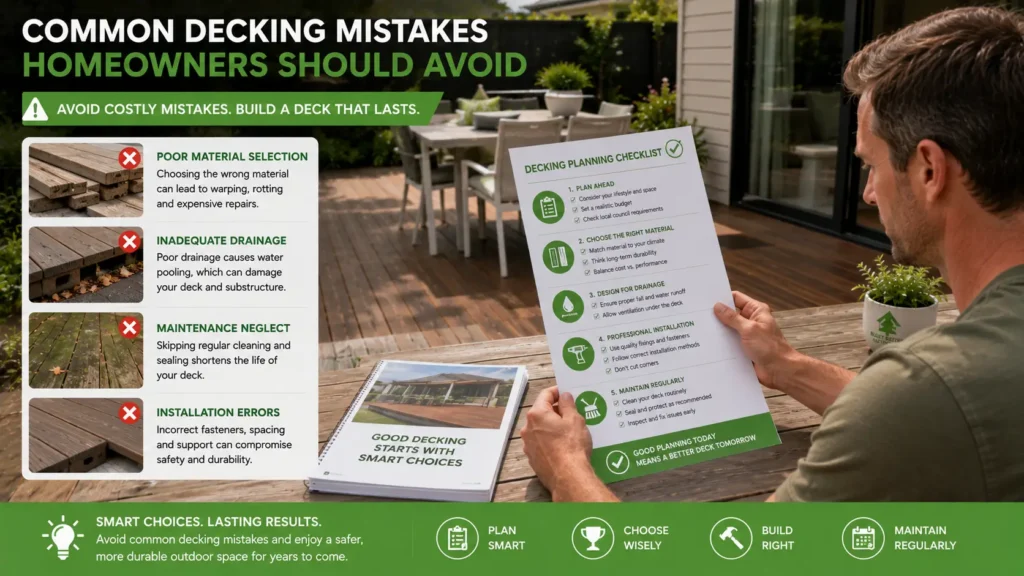
Common Decking Mistakes Homeowners Should Avoid
Choosing the right decking material is only part of creating a durable and attractive outdoor space. Many decking problems develop because important decisions are overlooked during the planning, material selection, or installation stages. By understanding the most common mistakes homeowners make, you can avoid unnecessary costs, reduce future maintenance issues, and ensure your deck performs well in Christchurch’s changing weather conditions.
Choosing Based On Price Alone
It is natural to compare decking options based on cost, especially when working within a budget. While upfront pricing is an important consideration, focusing solely on the cheapest material can lead to higher expenses over the life of the deck.
Lower-cost decking products may require more frequent repairs, treatments, or replacements. In some cases, homeowners end up spending more on maintenance than they would have by choosing a higher-quality material from the start.
- Long-Term Costs: Cheaper materials often have shorter lifespans and may require regular staining, sealing, or board replacement.
- Performance Differences: Not all decking products offer the same level of resistance to moisture, UV exposure, or wear.
- Property Value: High-quality decking materials can enhance the appearance and value of a home for many years.
- Maintenance Expenses: Ongoing upkeep can significantly increase the total ownership cost of a budget-friendly deck.
When comparing options, consider the full life-cycle cost rather than focusing only on the initial purchase price.
Ignoring Local Weather Conditions
Christchurch experiences a combination of strong sunlight, rainfall, occasional frost, and in some areas, coastal influences. These environmental factors can affect how different decking materials perform over time.
A material that performs well in another part of New Zealand may not necessarily be the best choice for Christchurch conditions. Selecting decking without considering local weather can lead to premature fading, warping, cracking, or moisture-related issues.
- UV Exposure: Prolonged sunlight can fade colours and dry out some timber species.
- Moisture Resistance: Materials that absorb water easily may be more vulnerable to swelling, mold, or rot.
- Temperature Changes: Seasonal expansion and contraction can place stress on decking boards and fasteners.
- Coastal Conditions: Salt-laden air can accelerate corrosion if unsuitable fixings or materials are used.
Understanding how Christchurch’s climate affects decking performance helps homeowners make more informed decisions and avoid future problems.
Underestimating Maintenance Requirements
Many homeowners are attracted to the appearance of natural timber without fully understanding the maintenance involved. Every decking material has different care requirements, and failing to plan for ongoing maintenance can affect both appearance and durability.
Regular cleaning, inspections, and protective treatments help extend the life of many decking products. Ignoring these responsibilities can shorten the lifespan of the deck and increase repair costs.
- Timber Care: Natural timber often requires periodic staining, oiling, or sealing to maintain its appearance and protection.
- Cleaning Needs: Dirt, leaves, and moisture build-up can encourage mould and surface staining.
- Inspection Routine: Checking for loose fasteners, damaged boards, and drainage issues helps prevent larger problems.
- Material Selection: Composite and aluminium decking generally require less maintenance than many timber options.
Before choosing a material, it is important to understand the level of care required throughout its lifespan and ensure it matches your expectations and lifestyle.
Poor Installation Practices
Even the highest-quality decking material can perform poorly if it is not installed correctly. Installation mistakes are one of the most common causes of premature deck failure and costly repairs.
Proper framing, board spacing, ventilation, and drainage all contribute to the strength and longevity of a deck. Overlooking these factors can create structural issues and moisture-related damage.
- Correct Framing: A stable frame provides the foundation needed to support decking boards and maintain structural integrity.
- Board Spacing: Adequate spacing allows for drainage and natural movement caused by temperature changes.
- Drainage Management: Water should be directed away from the structure to reduce moisture accumulation.
- Ventilation: Good airflow beneath the deck helps minimise moisture retention and reduces the risk of rot.
Working with experienced decking professionals and following manufacturer installation guidelines can significantly improve the lifespan and performance of your outdoor living space.
Avoiding these common decking mistakes can help you make smarter decisions from the beginning of your project. By balancing cost, weather suitability, maintenance expectations, and installation quality, you can create a deck that remains attractive, functional, and durable for many years in Christchurch’s unique climate.
Choosing the right decking material can save you time, maintenance costs, and future repairs while creating an outdoor space that performs well in Christchurch’s changing weather conditions. If you are planning a new deck or upgrading an existing one, explore our expert decking resources and material recommendations to find the option that best suits your property, lifestyle, and budget. Our team is here to help you make a well-informed decision with practical advice tailored to your specific project goals.
References
- Choosing the Right Decking Material: A Practical Guide for NZ Homes
https://www.trendsetbuild.co.nz/blog/choosing-the-right-decking-material-a-practical-guide-for-nz-homes - Timber vs Composite Decking: 6 Key Factors to Help You Pick
https://archipro.co.nz/article/timber-vs-composite-decking-new-zealand - Composite Decking Christchurch, NZ: A Complete Guide
https://impactoutdoors.co.nz/composite-decking-christchurch-nz-a-complete-guide/ - Types Of Decking NZ Ultimate Guide
https://www.bakersbuilds.nz/types-of-decking-nz-ultimate-guide/
FAQs: About Best Deck Materials For Christchurch Weather
What Are The Best Deck Materials For Christchurch Weather?
The best deck materials for Christchurch weather are composite decking, hardwoods such as Kwila and Vitex, and quality treated pine. These materials can withstand UV exposure, moisture, seasonal temperature changes, and coastal conditions. The ideal choice depends on your budget, maintenance preferences, and desired appearance.
Is Composite Decking A Good Choice For Christchurch Homes?
Yes, composite decking performs well in Christchurch because it resists moisture, fading, rot, and insect damage. It also requires less maintenance than most timber options. Many homeowners choose composite decking for its durability and long lifespan.
Which Decking Material Requires The Least Maintenance?
Composite decking and aluminium decking typically require the least maintenance. Unlike timber, they do not need regular staining, sealing, or extensive upkeep. Routine cleaning is usually enough to keep them looking their best.
How Long Does Decking Last In Christchurch Conditions?
The lifespan of decking depends on the material, installation quality, and maintenance. Hardwood decking can last 25 years or more with proper care, while composite decking often lasts 25 to 30 years. Treated pine may last 15 to 20 years when maintained correctly.
Is Hardwood Decking Better Than Treated Pine?
Hardwood decking generally offers greater durability, strength, and natural resistance to weather conditions. Treated pine is more affordable and widely available but typically requires more maintenance over time. The best option depends on your budget and long-term goals.
What Is The Best Decking Material For Coastal Christchurch Properties?
Composite decking, aluminium decking, and certain hardwoods are often recommended for coastal environments. These materials are better equipped to handle salt air, moisture, and harsh weather exposure. Choosing corrosion-resistant fixings is also important for coastal installations.
Does Christchurch Weather Affect Deck Maintenance Requirements?
Yes, Christchurch weather can influence how often a deck needs cleaning, sealing, or repairs. UV exposure, rainfall, frost, and temperature fluctuations can all contribute to wear and tear. Selecting a weather-resistant material can reduce ongoing maintenance needs.
Which Decking Material Offers The Best Long-Term Value?
Composite decking often provides strong long-term value because of its durability and reduced maintenance costs. While the upfront investment may be higher, many homeowners find the lower upkeep expenses worthwhile over the life of the deck.
Can Frost And Cold Weather Damage Decking Materials?
Poor-quality or improperly installed decking can be affected by frost and repeated temperature changes. Expansion, contraction, and moisture exposure may cause cracking or warping over time. Choosing suitable materials and proper installation methods helps minimise these risks.
How Do I Choose The Right Decking Material For My Home?
Start by considering your budget, maintenance expectations, property location, and desired appearance. Evaluate how different materials perform in Christchurch’s climate and compare their lifespan and costs. Consulting a decking professional can help you select the most suitable option for your specific project.
Conclusion
Choosing the best deck materials for Christchurch weather comes down to balancing climate suitability, maintenance requirements, budget, lifespan, and the appearance you want to achieve for your outdoor space. Christchurch properties can experience strong sunlight, seasonal moisture, frost, and, in some locations, coastal conditions, making it important to select a decking material that can perform well in your specific environment. While hardwood decking offers natural beauty and durability, composite decking provides a low-maintenance alternative that appeals to many homeowners seeking long-term value. Treated pine remains a popular option for those working within a tighter budget, while aluminium and other alternative materials may suit properties with unique performance requirements. Before making a final decision, take the time to assess your property’s exposure to weather, your maintenance expectations, and your long-term plans for the space. Comparing different material options and understanding their strengths and limitations will help you make a more informed investment. If you are unsure which decking material is best suited to your home, seeking professional advice or requesting a decking consultation can provide valuable guidance tailored to your location, lifestyle, and project goals, helping you create an outdoor area that remains attractive and functional for years to come.